The Association of Zoo and Aquariums (AZA) defines an Ambassador Animal as “an animal whose role includes handling and/or training by staff or volunteers for interaction with the public and in support of institutional education and conservation goals”
You can meet our wildlife ambassadors by booking a tour at the Northwoods Wildlife Center.
Tours run from mid May through September Tuesday – Saturday, from 9 AM – 4 PM.
To book a tour, or for more information, call (715) 356-7400.
Zeus – American Kestrel
Zeus is a male American kestrel who came to us from Florida, where he was found on the ground, rescued, and brought to the nearest Wildlife Center. An examination revealed that Zeus was born with a wing defect. One radius ulna is too short, which means he cannot fly. According to our lead rehabber, Zeus more than likely knows this, and that is why he does not even attempt flight. We found Zeus through a network of rehabbers and rehabilitation centers facilitated by the International Wildlife Rehabilitation Council. For some time we had been actively looking for a small falcon to join us here at the Center. Already we can tell that Zeus’ sassy personality will contribute greatly to our educational programming and day-to-day life here at the Wildlife Center.
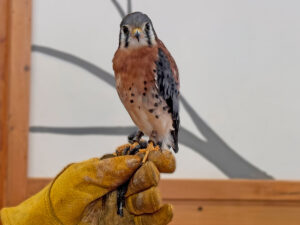
The American Kestrel (Falco sparverius) is North America’s smallest falcon—an energetic, colorful hunter of open habitats like meadows, pastures, and field edges. You’ll often spot kestrels perched on wires or even hovering in place as they scan for grasshoppers, dragonflies, lizards, and small mammals before dropping in to snatch prey with their feet, and they typically nest in natural tree cavities or nest boxes. Fun kestrel superpower: they can see into the ultraviolet spectrum, which can help them pick out rodent scent/urine trails and zero in on productive hunting areas. Our ambassador kestrel is from Florida’s resident “southeastern” population, which tends to be slightly smaller than the northern kestrels found at higher latitudes.
Sponsorship Opportunities for Zues
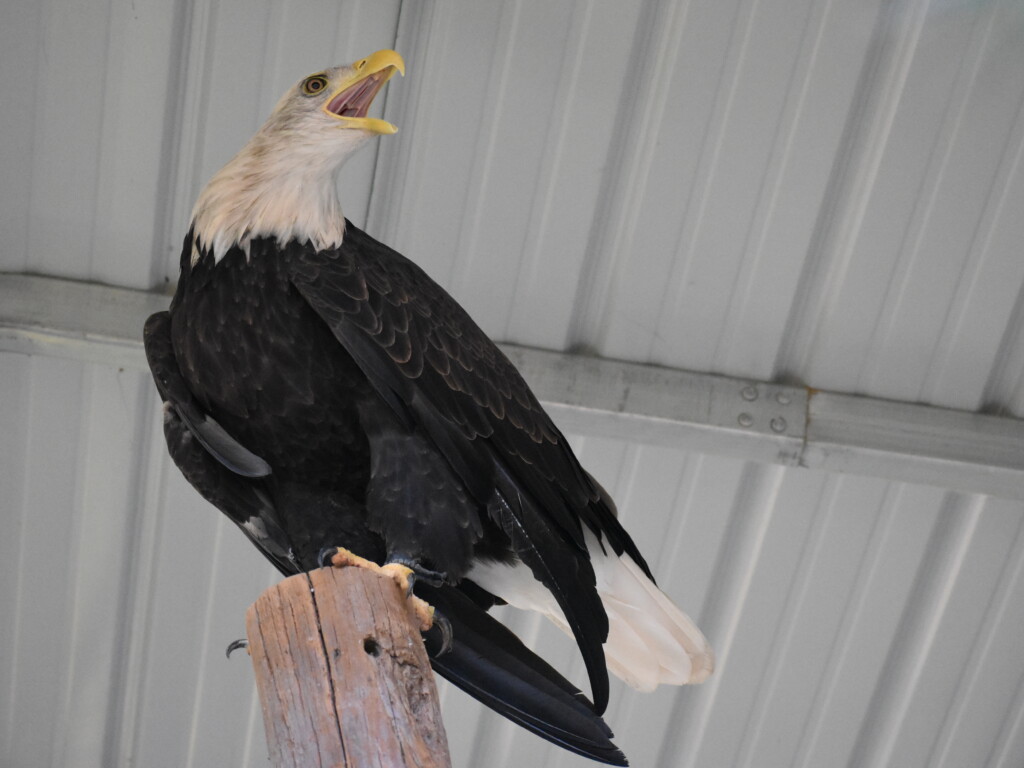
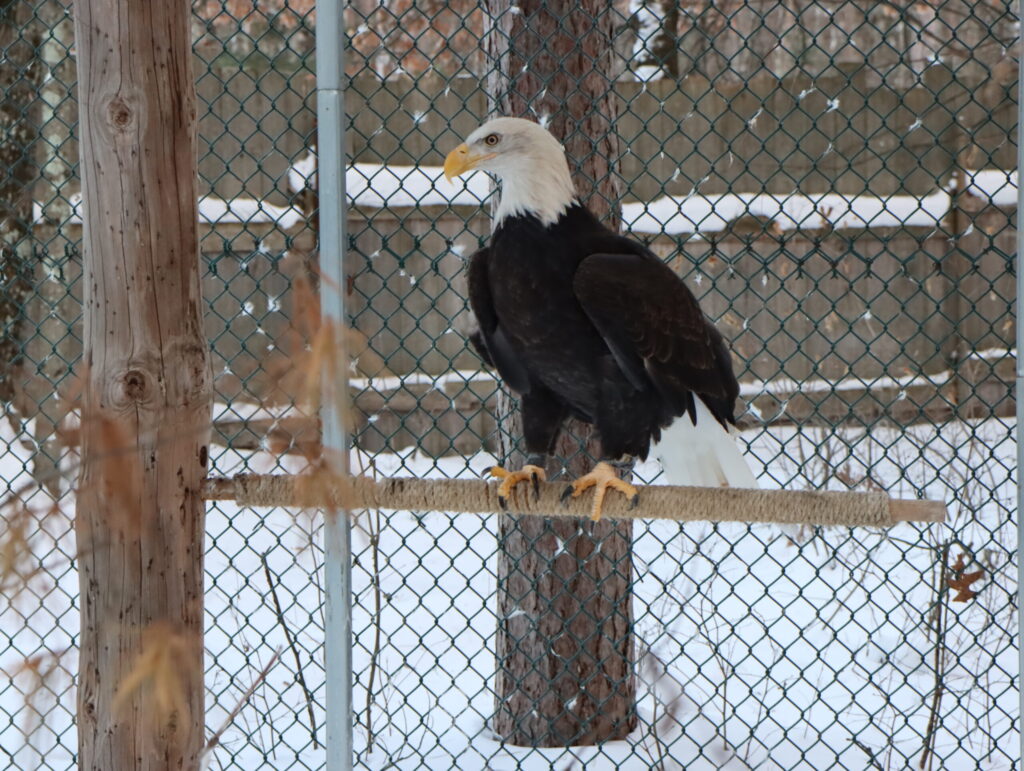
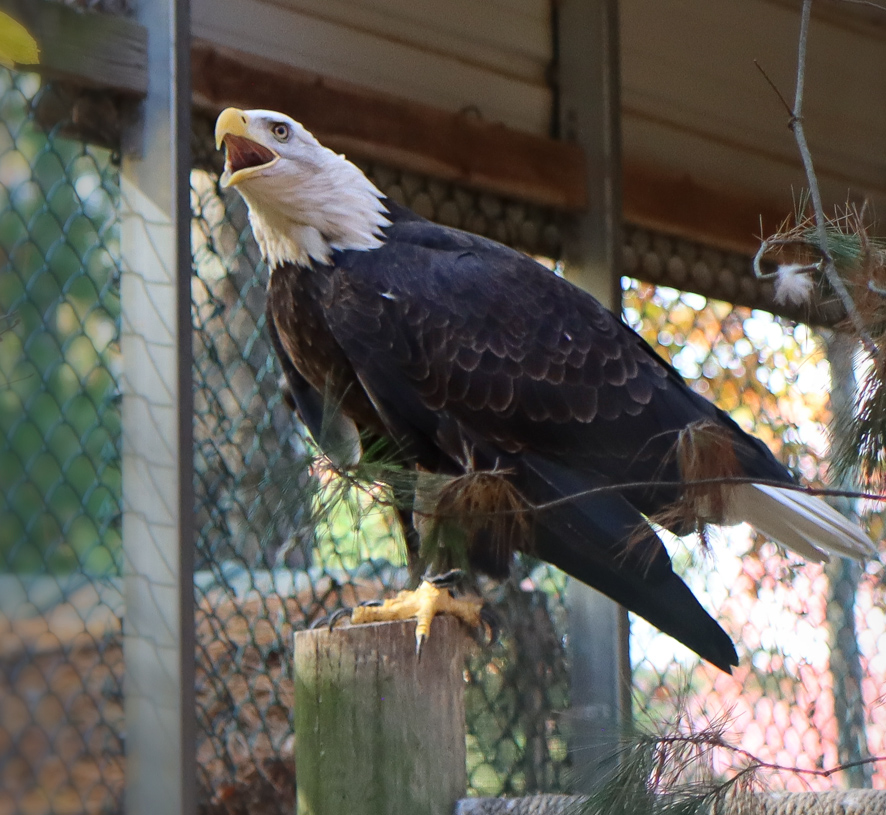
Hanna – Bald Eagle
Hanna was transferred to the Northwoods Wildlife Center in winter 2018 from another wildlife rehabilitation facility located in Helena, Montana. After being hit by a train and undergoing a partial wing amputation, Hanna spent many years as an ambassador animal at that facility.
Since her arrival at NWC, Hannah has become a favorite for visitors, being the 1st ambassador along the tour, and hopes to educate many about the amazing world of eagles!
Sponsorship Opportunities for Hanna
Saros: Gyrfalcon
Saros came to the Northwoods Wildlife Center in the fall of 2024 after retiring from falconry. Saros was raised by humans for falconry, and to this day is very comfortable around and interested in people.
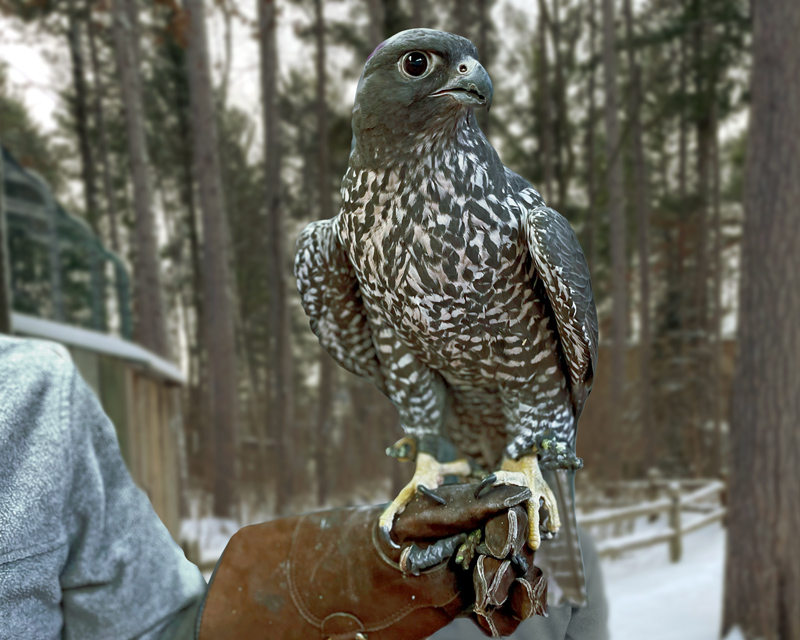
Gyrfalcons (Falco rusticolus) are powerful Arctic raptors built for open, windy country—tundra, coastal areas, and mountains—where they typically nest on tall cliff faces and hunt over wide, treeless landscapes. In the wild, they’re famously persistent hunters, often chasing prey in fast, low pursuit rather than relying only on steep “stoops,” and they feed heavily on ptarmigan (plus waterfowl and other birds when available). A fun gyr-specific tidbit: they’re highly variable in color—ranging from nearly pure white to very dark—and “Gyrfalcon” is pronounced “JER-falcon.”
Sponsorship Opportunities for Saros
Gemma: American Goshawk
GEMMA was admitted to Northwoods Wildlife Center in September 2015 from Manitowish Waters. She was found blind in one eye and had a broken wing. It was also possible that she had contracted West Nile Virus as some point in the past.
It was soon determined Gemma’s injuries would never heal enough to be returned to the wild. She was put on NWC’s educational tour in the early summer of 2016, and has been doing wonderfully ever since!
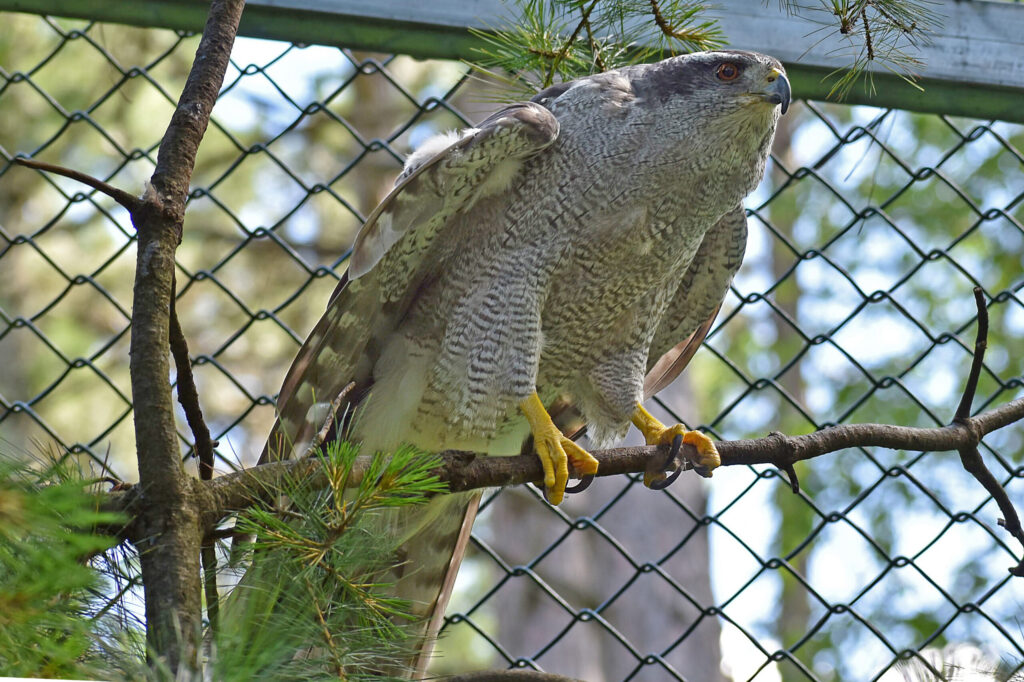
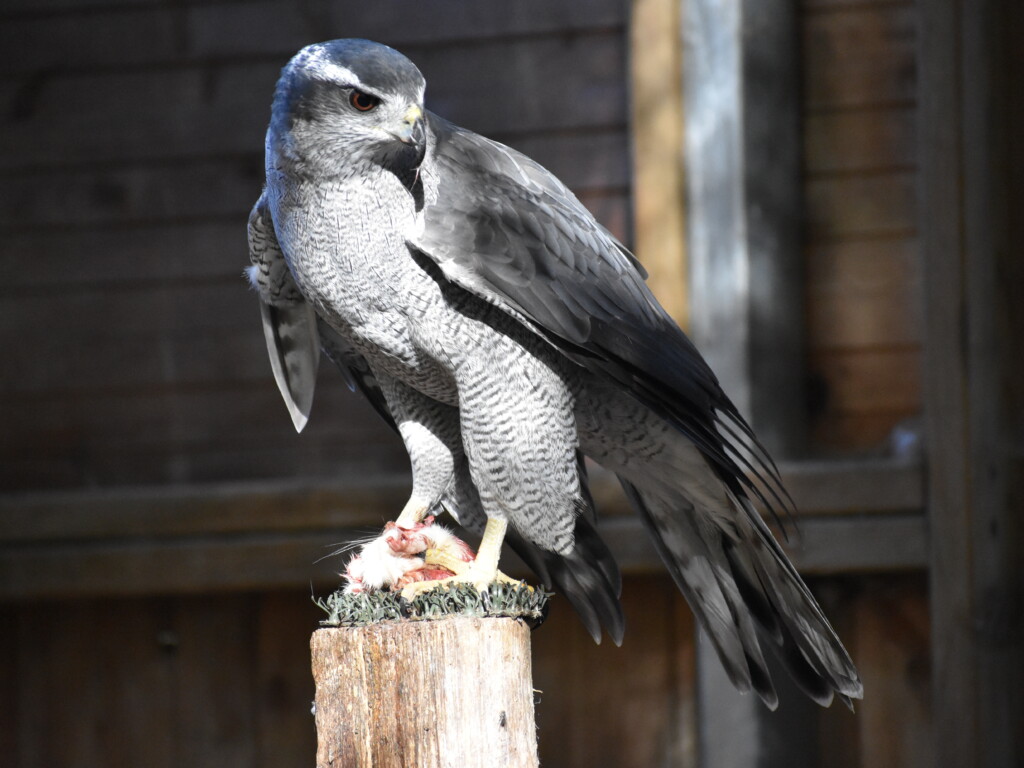
The American Goshawk (Accipiter atricapillus) is the heavyweight “forest hawk” of the Northwoods—secretive most of the year in large tracts of mature conifer and mixed forest, but built for lightning-fast pursuit through tight timber with short, powerful wings and a long rudder-like tail. It hunts by ambush and rapid bursts of speed inside the woods or along forest edges, taking prey such as squirrels, rabbits, grouse, and other birds. Near an active nest, goshawks become famously vocal and fiercely defensive, and they have been known to dive at people who get too close—so giving nesting areas plenty of space is a must. Fun tidbit: in some years (often tied to prey availability farther north), goshawks can “irrupt” and appear well south of their usual range, which is why birders get especially excited when one turns up locally.
Sponsorship Opportunities for Gemma
Red-Tailed Hawks: Tommi, Race and Willow
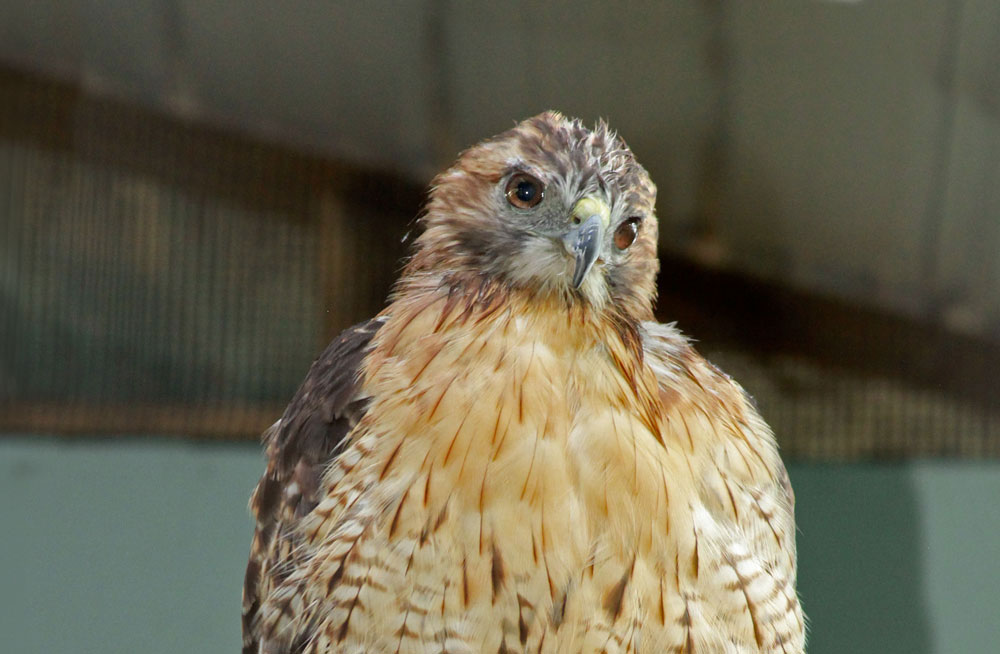
The Red-tailed Hawk (Buteo jamaicensis) is one of the most familiar raptors in North America—often seen soaring in wide circles over open country or perched on poles and treetops scanning for prey. It thrives anywhere there’s a mix of open hunting ground and high perches, from fields and forest edges to prairies, deserts, and even suburbs, and it mainly targets small mammals like voles and rabbits, plus birds when the opportunity arises. A classic “Northwoods sky” sound comes from this species: adults give a hoarse, ringing kee-eeeee-arr while soaring—fun fact, that red-tailed hawk screech is also often used as the “eagle scream” you hear in many movies and TV scenes featuring bald eagles.
Tommi: Red-Tailed Hawk
TOMMI was admitted to Northwoods Wildlife Center in August 2016 after being hit by a car. The severity of her wing injury led to a partial wing amputation, leaving Tommi non-flighted. She now attends educational programs throughout the Northwoods, educating the public on the world of Red-tailed Hawks!

Sponsorship Opportunities for Tommi
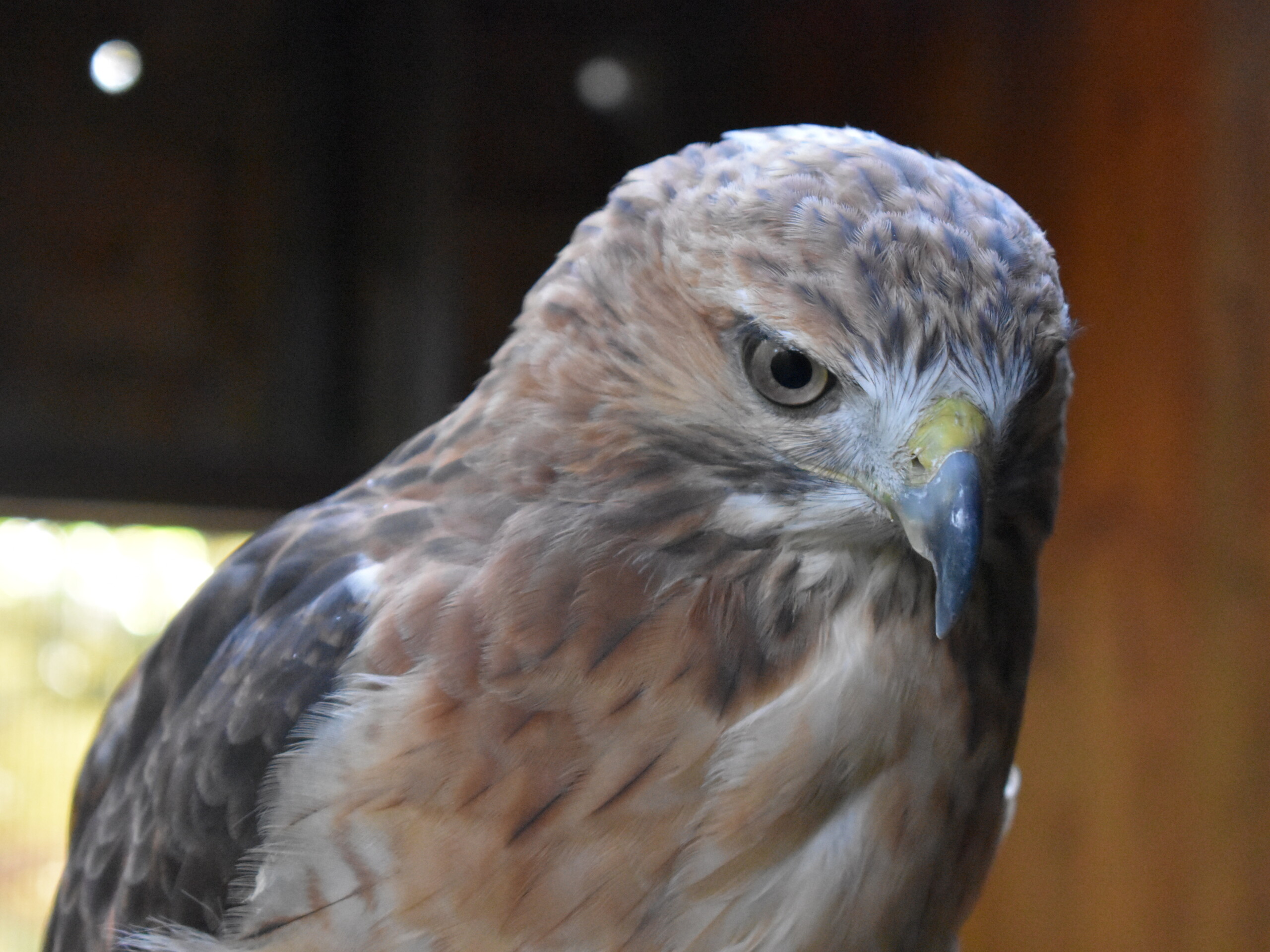
Race: Red-Tailed Hawk
RACE was transferred to Northwoods Wildlife Center on May 6, 2012 from another rehabilitation center in Illinois. He has a dislocation of the left elbow, however the original cause of his injury is unknown.
Sponsorship Opportunities for Race
Willow: Red-Tailed Hawk
Willow tends to be very vocal and chatty, especially around people she likes. Willow is also roommates with Race and is usually more calm than he is, except when its time to eat. Willow is usually the first one to fit down and grab her food!
Sponsorship Opportunities for Willow
Woody: Wood Turtle
Woody is also a popular visitor at area schools. His likable (and feisty) personality helps to teach children about Wood Turtles, a threatened species in Wisconsin.
WOODY the Wood Turtle was given to the Center in 1990 by his former owner. Since then, Woody has become one of NWC’s most well-known residents. He can often be found crawling on the floor of the NWC lobby, engaged in his favorite pastime – sneaking up on staff members in order to bite their shoes!
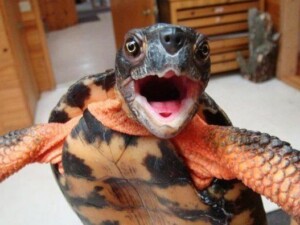
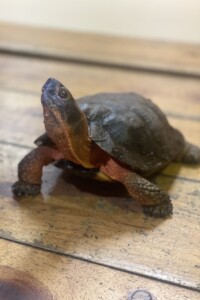
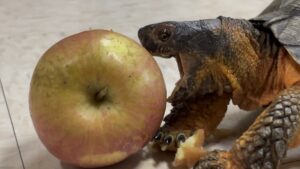

The Wood Turtle (Glyptemys insculpta) is a semi-terrestrial turtle that depends on clean, flowing rivers and streams, but spends much of the warm season walking and foraging in nearby forests, wet meadows, and streamside openings—in Northern Wisconsin it typically stays close to water and overwinters underwater in deep holes or undercut banks where flow helps prevent freezing. They’re easy to recognize by a “carved” wood-grain shell and the orange-to-reddish color on the neck and legs; here in Wisconsin you’ll often see the “underside” tones range from pale yellow-orange to rich orangish-red, with lots of individual variation. Fun wood-turtle-only behavior: they can “worm stomp,” rhythmically thumping feet (and sometimes shell) to mimic rain or underground movement—tricking earthworms into surfacing for an easy meal.
Sponsorship Opportunities for Woody
Hubertus: Florida Soft-Shelled Turtle
HUBERTUS came to the Northwoods Wildlife Center in 1990 after becoming too large for her owner’s tank. Since then she has grown a little bit more, but now believed to have reached her full size.
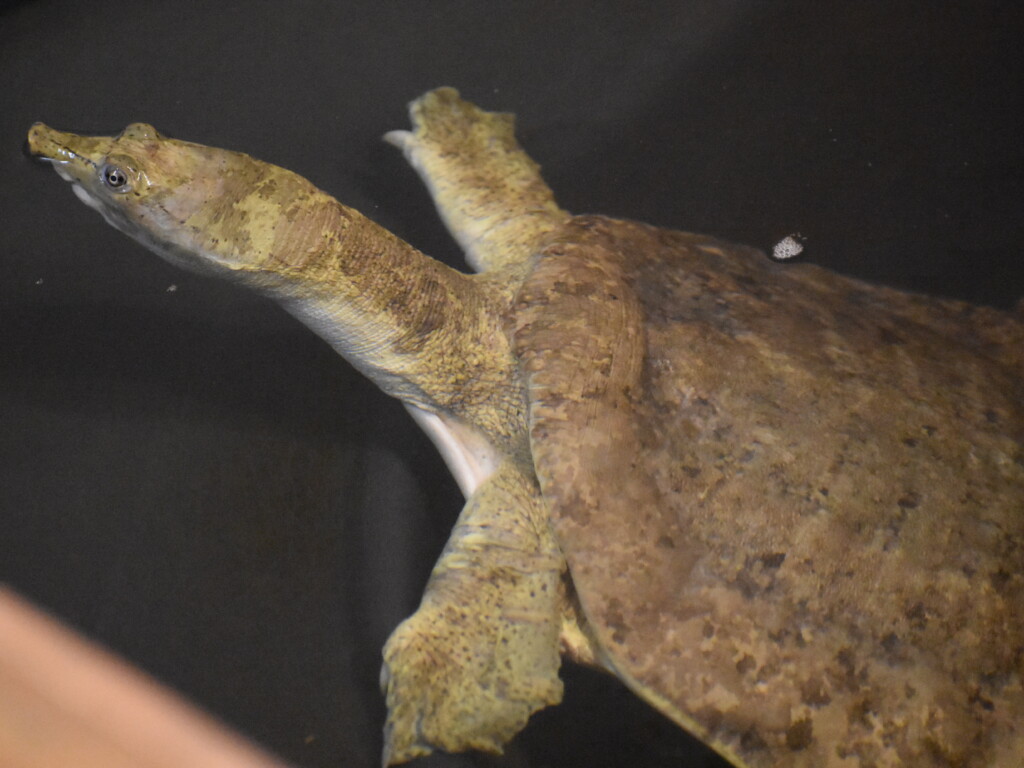
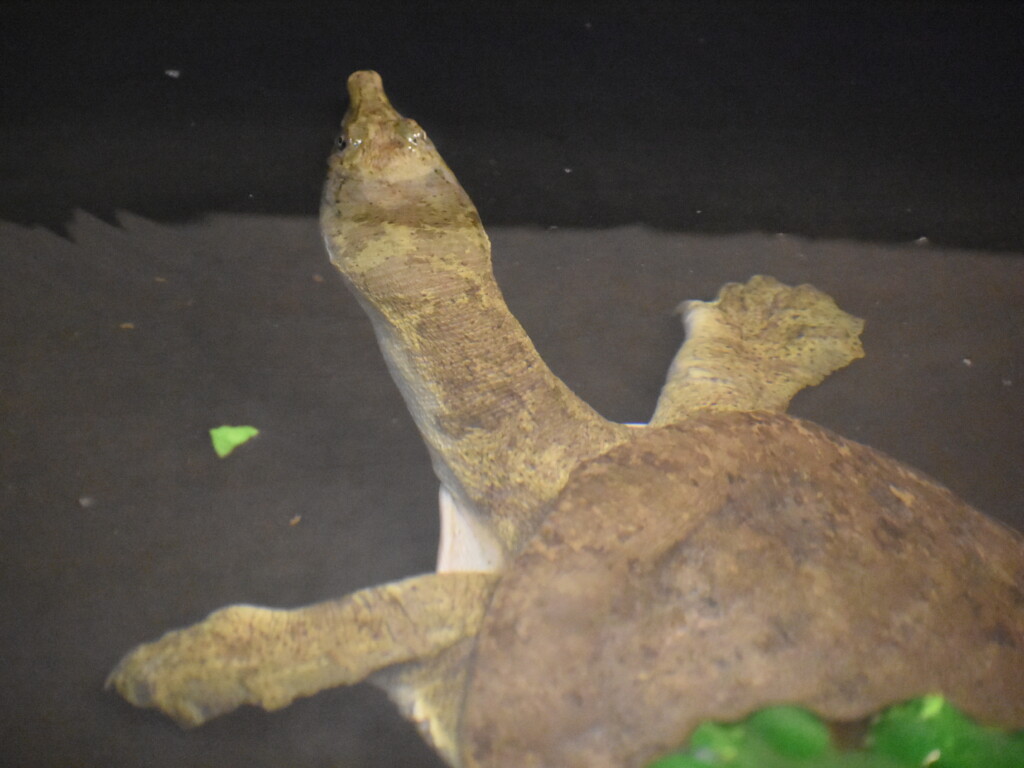
Soft-shell turtles spend their time at the bottom of a lake covered in sand or mud. They remain there still as possible so that their prey, such as crayfish, small fish, and snails, won’t notice them. When the moment is right, they strike and hopefully their patience is rewarded with a good meal.
Sponsorship Opportunities for Hubertus
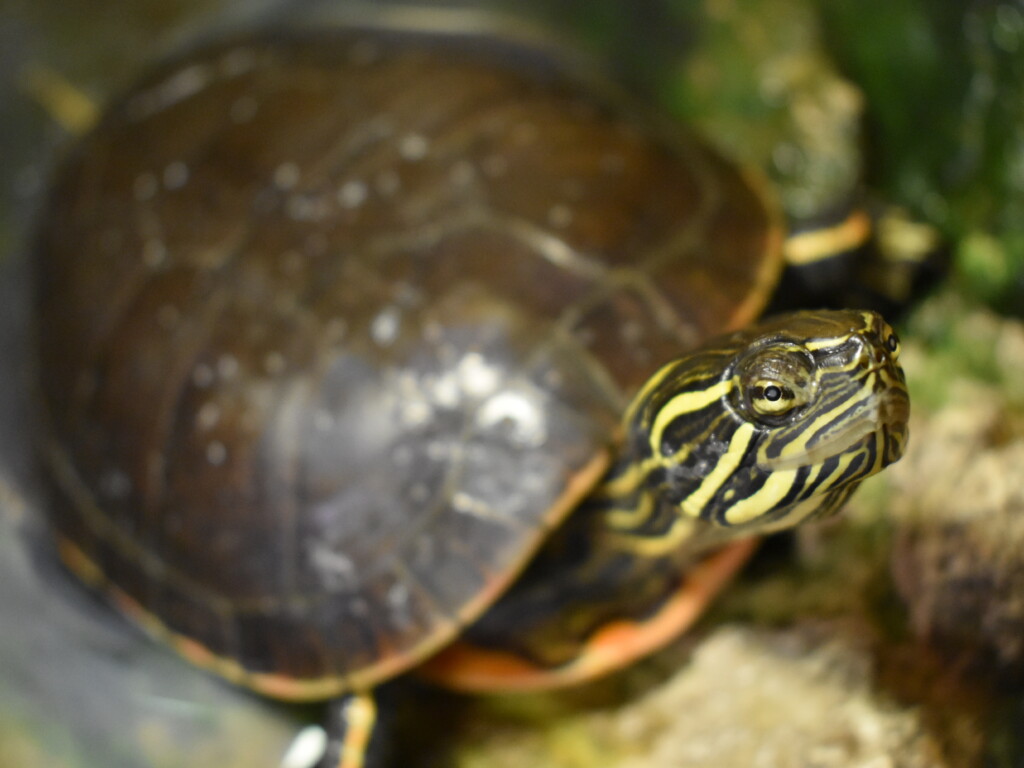
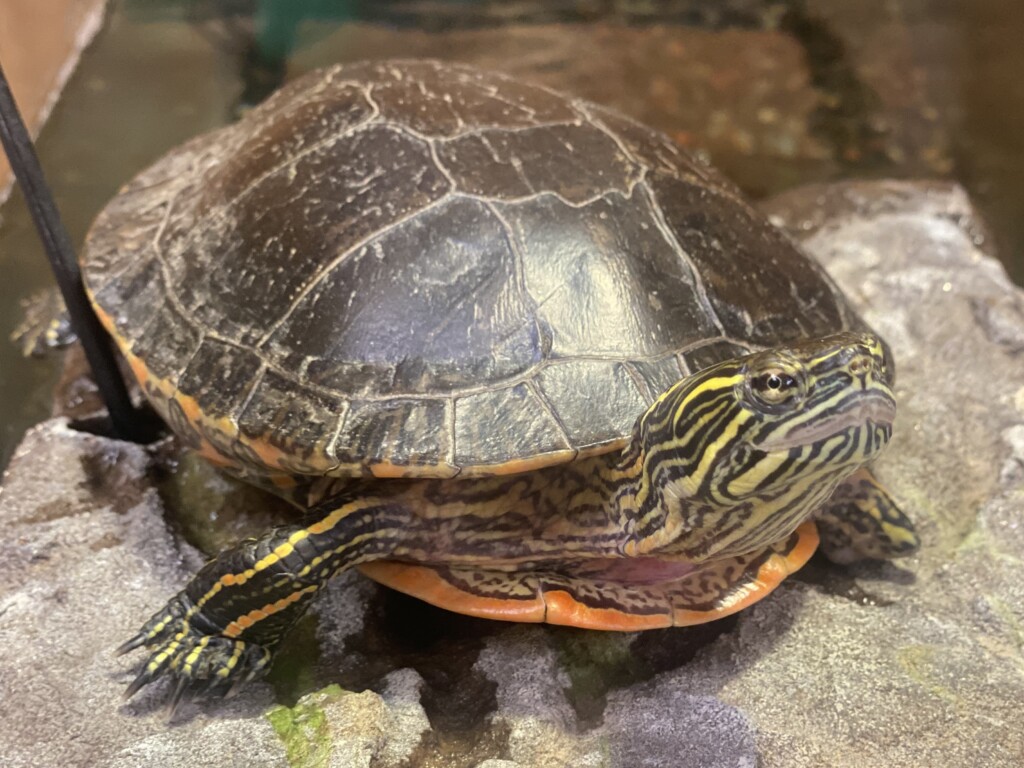
Hook & BB: Painted Turtles
BB arrived at Northwoods Wildlife Center during winter 2013 – she was dropped off by the front door in the middle of the night. Since we knew nothing of BB’s history, we were unable to release her back into the wild, and she soon became a permanent education turtle.
HOOK came in to Northwoods Wildlife Center with a fishing hook in her left eye and was missing her left front foot. Her two handicaps deemed her non-releasable, and it was decided to keep her permanently in July 1999.
Mini & Aqua: Snapping Turtles
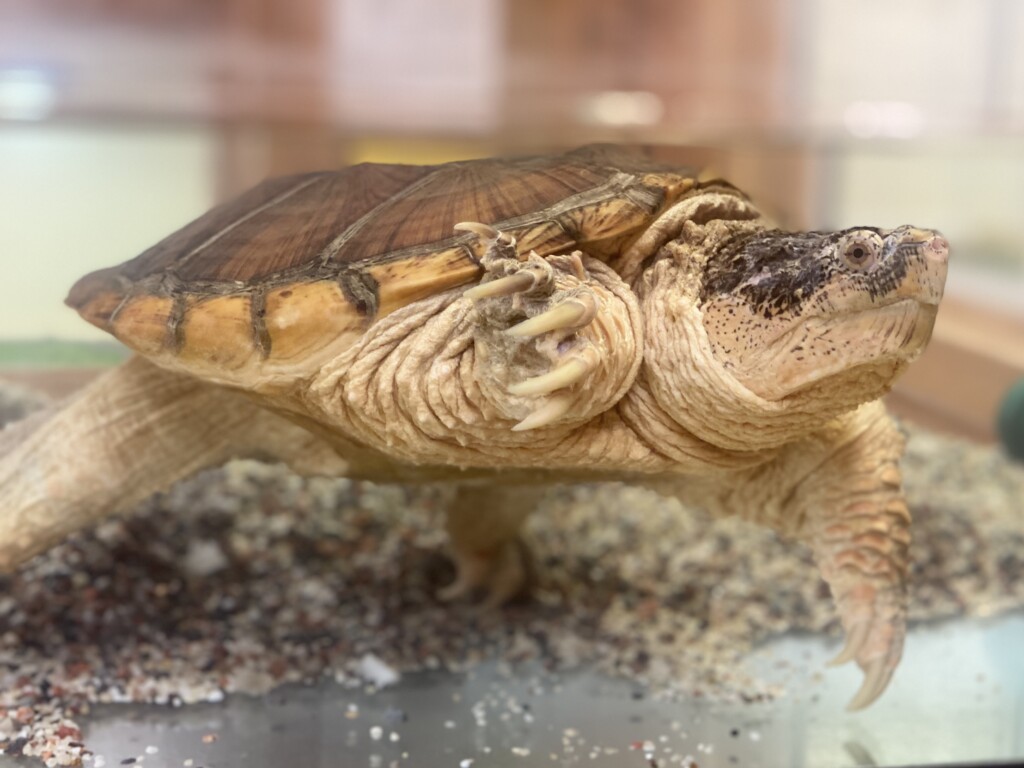
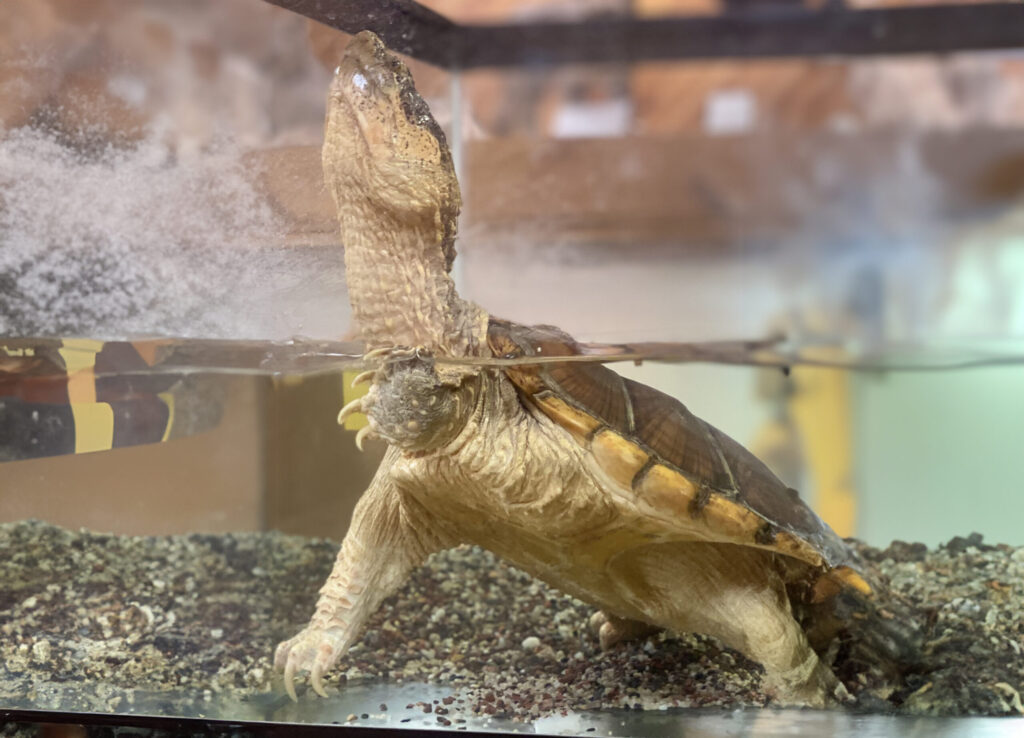
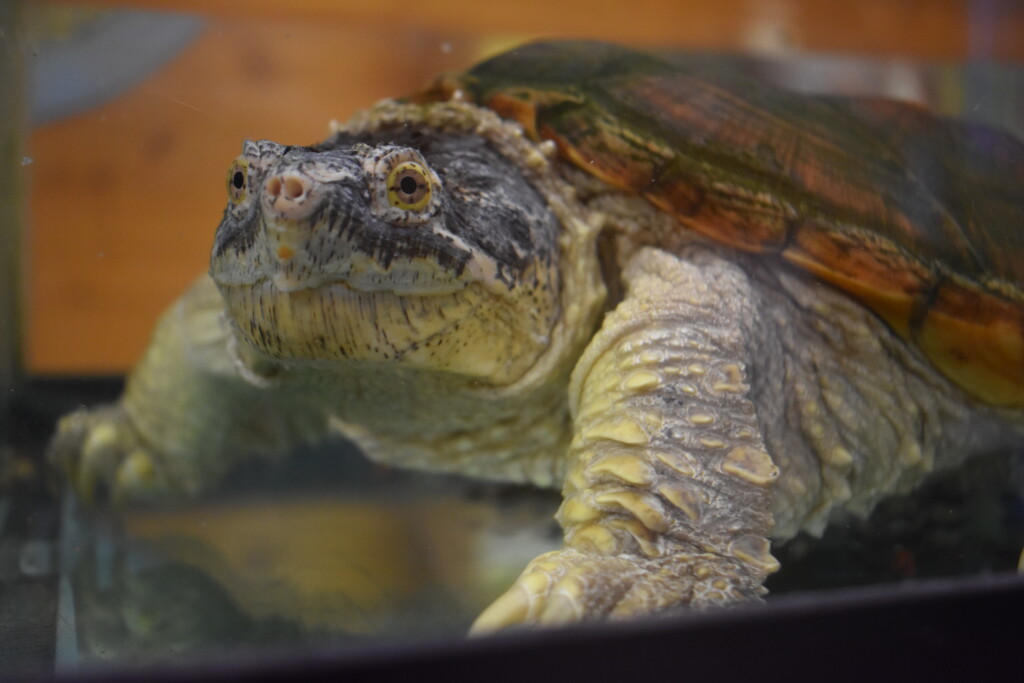
MINI and AQUA arrived at Northwoods Wildlife Center during the summer of 2013. They, along with over twenty other turtles, were being raised in captivity to one day be eaten! Since this is illegal in Wisconsin, Mini, Aqua, and the rest of the turtles were taken by the Wisconsin Department of Natural Resources and found new homes at education centers throughout the state!
Sponsorship Opportunities for Mini and Aqua
Three-Toed Box Turtles: Speedy, Pandora and Bull
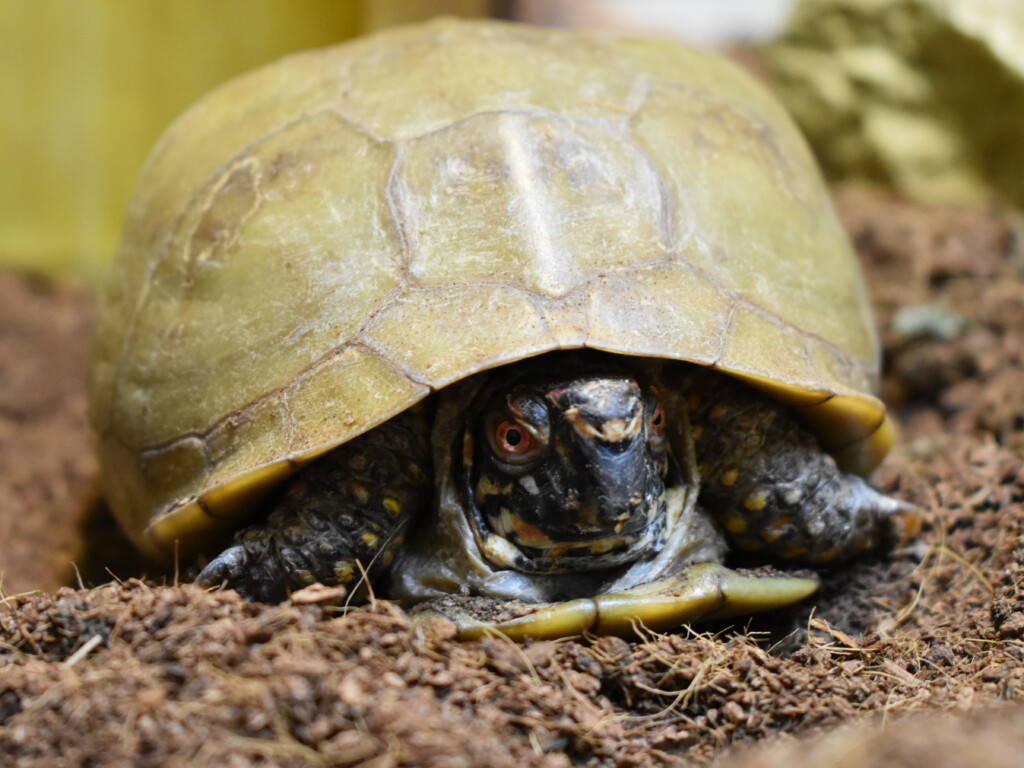
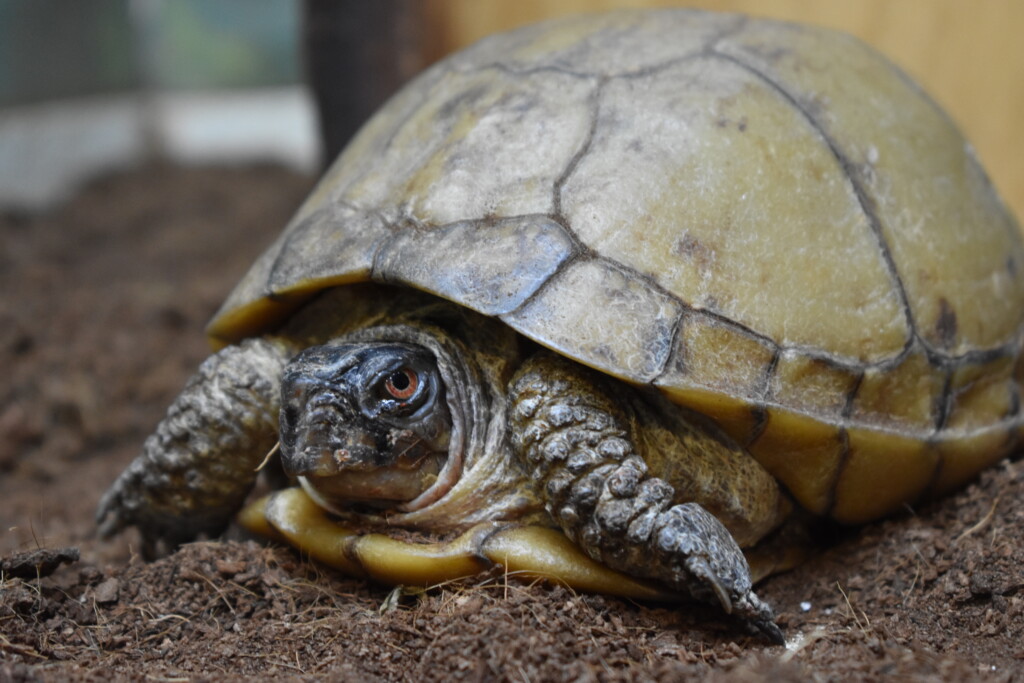
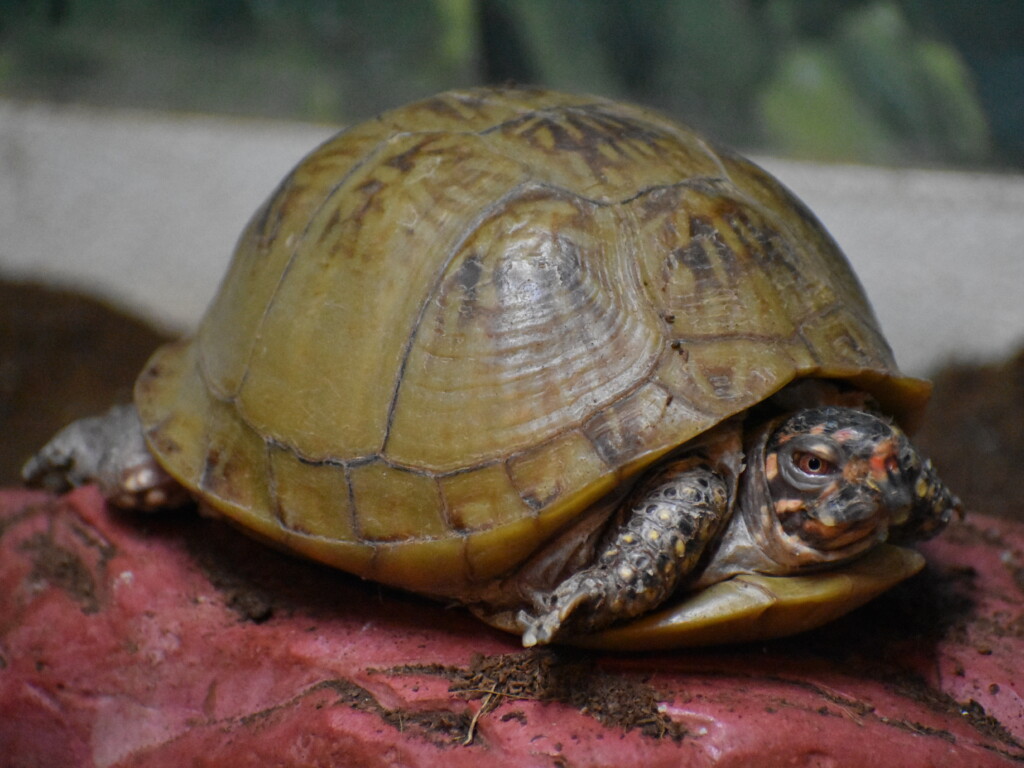
Our box turtles are all former pets that were donated to be used in our education programs. Bull is also our local star as he has been used in Foster & Smith catalogs.
A main source of protection for box turtles comes from a band of skin going across the first ¼ of their bottom shell. This band of skin acts like a hinge, which allows them to close up in their shells completely.
Sponsorship opportunities for Speedy, Pandora and Bull
Candy: Corn Snake
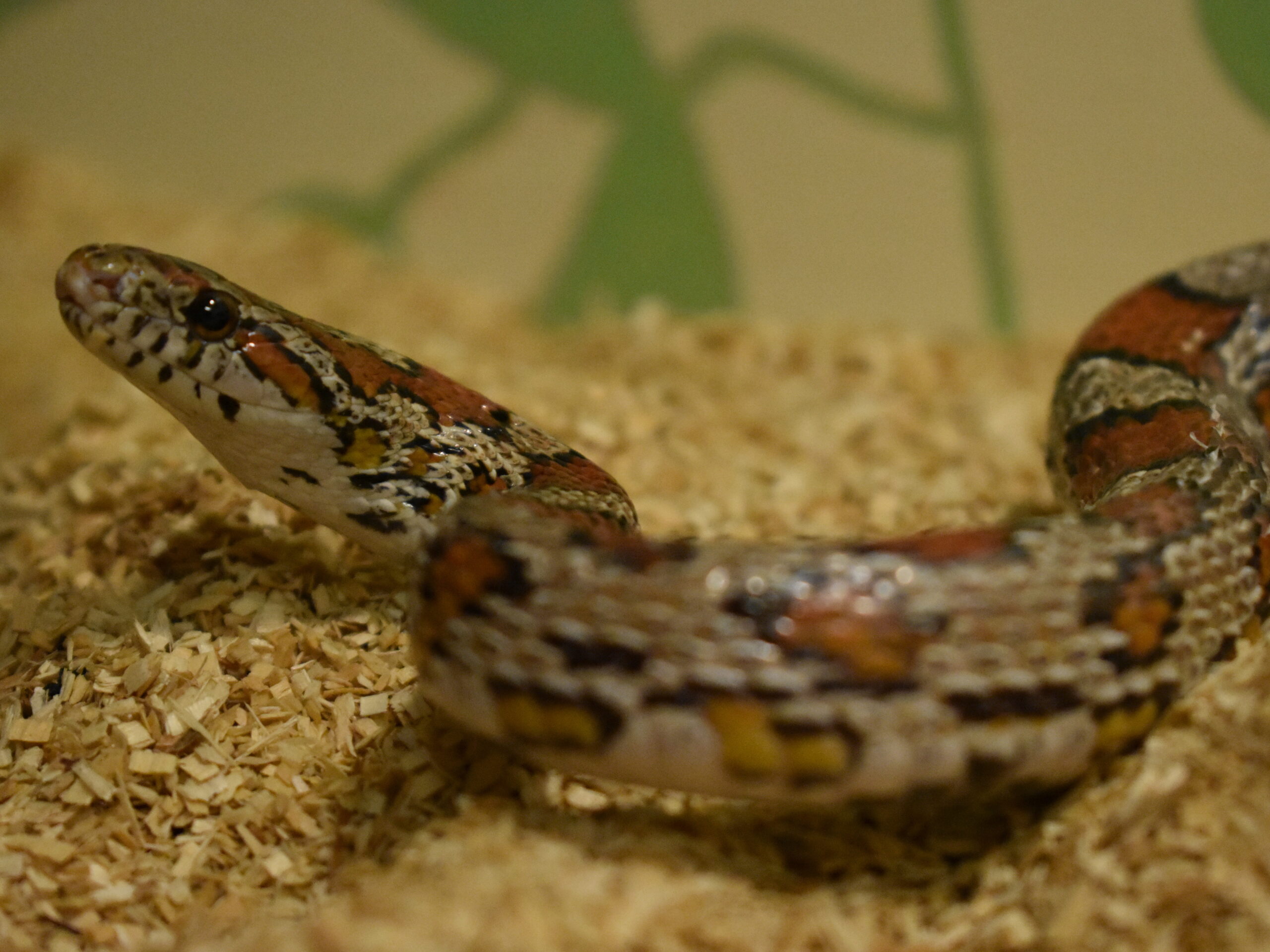
CANDY first arrived at the Northwoods Wildlife Center during the summer of 2003. She was found on a plant nursery delivery truck that had traveled north from the southern United States. Since Corn Snakes are not native to Northern Wisconsin, Candy would not be used to our frigid winters so we were unable to release her back into the wild. It was then decided to keep Candy as an education ambassador snake.
Corn snakes are probably named such because of their belly markings – these markings often look very similar to the checkered pattern of maize or Indian Corn.
Sponsorship Opportunities for Candy
Sancho: Rat Snake
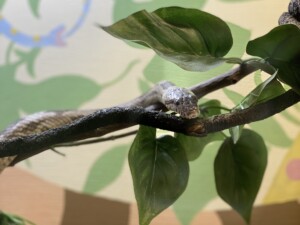
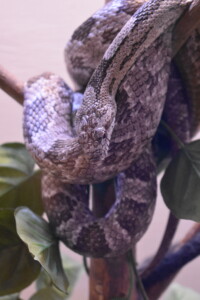
SANCHO came to the Northwoods Wildlife Center during the summer of 2014. He had been a pet whose owner no longer had time to care for him. Rat snakes are native to southwestern Wisconsin, however can regularly be found in the pet trade. We agreed to take Sancho in to use for educational programs throughout the Northwoods. Sancho is a gentle and curious snake who enjoys interacting with people. He can regularly be seen climbing his vines throughout his enclosure.