By Advanced Rehabber Sheridan Perry
What Are Vernal Pools?
Vernal pools—also known as ephemeral ponds—are small, temporary bodies of water that form in the spring. The word “vernal” simply means spring-related, which is fitting because these pools depend on snowmelt and seasonal rains. If the word ephemeral sounds familiar to you, it might be because you checked out our spring ephemeral podcast episode on Spotify. If you haven’t yet, we highly recommend it!
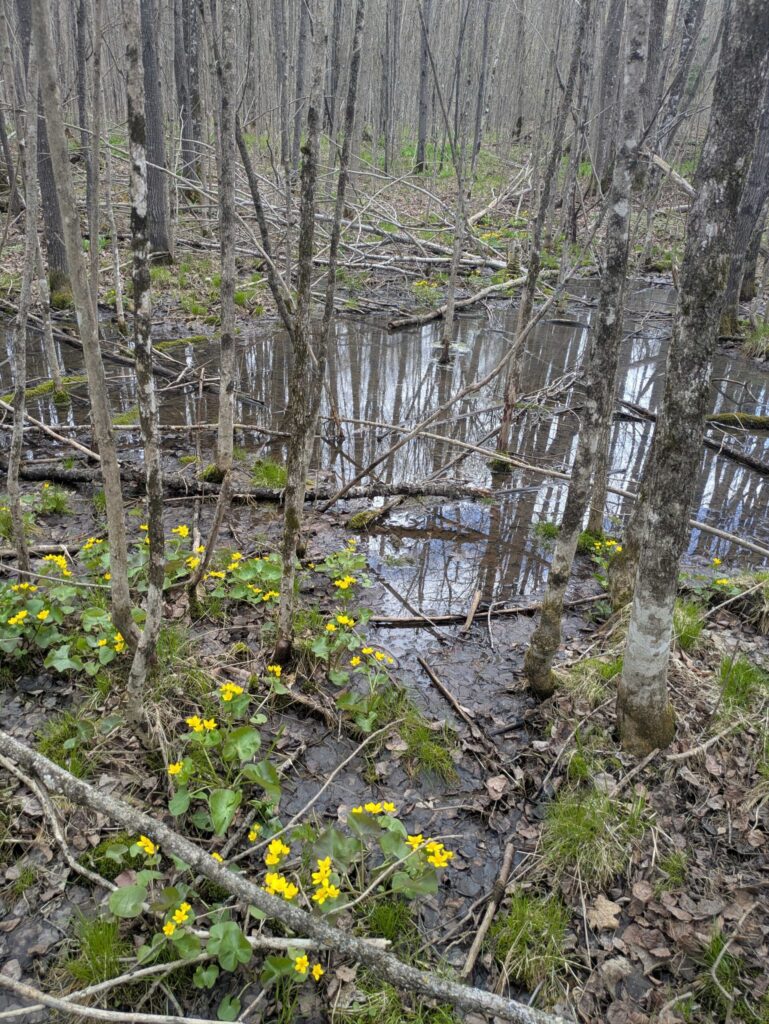
You’ll usually find verbal pools in shallow depressions in low-lying woodland areas. Unlike permanent ponds or lakes, vernal pools don’t have streams flowing in or out, which means they eventually dry up—often by mid to late summer. At first glance, they may seem insignificant. But don’t be fooled—these short-lived wetlands are ecological powerhouses.
How to Find a Vernal Pool (Even When It’s Dry)
Because vernal pools don’t stick around all year, finding them can feel like a bit of a treasure hunt. Most vernal pools are quite small and easy to miss—typically less than 40 yards across and under 4 feet deep. Here are some clues to look for:
- Flattened or darkened leaves (evidence of seasonal flooding)
- Water lines on nearby trees
- Gray, compacted soil
- Water-tolerant plants
- And in spring…follow the unmistakable calls of frogs like the spring peeper and the wood frog
Why Vernal Pools Matter
Despite their small size and short lifespan, vernal pools play a big role in the ecosystem.
Because they dry up annually, fish can’t survive in them. That creates a safe breeding ground for many species whose eggs and young would otherwise be eaten. Species that use ephemeral ponds as nursery areas include frogs, toads, salamanders and newts, and lots of invertebrates. Some species, like the fascinating fairy shrimp, depend entirely on vernal pools to complete their life cycles.
Beyond that, vernal pools:
- Provide food and water for animals like deer, birds, bats, and bears
- Help reduce flooding by absorbing runoff
- Improve water quality by filtering pollutants
- Contribute to carbon storage, helping regulate climate
They’re also incredibly valuable for people—offering beautiful, biodiverse spaces right in our own backyards.
Common Vernal Pool Species
Fairy Shrimp (yes, they’re real)
Fairy shrimp are tiny, almost alien-looking crustaceans related to crayfish. They range from about half an inch to two inches long and can be easy to miss unless you’re looking closely.
They have an incredible survival strategy in which some of their eggs hatch immediately while others can remain dormant for up to 15 years, waiting for the right conditions.
Amphibians
Vernal pools are especially important for amphibians like:
- Wood Frog – famous for surviving winter by partially freezing
- Spring Peeper – one of the first frogs you’ll hear each year
- American toads, gray tree frogs, and green frogs
Want more info on amphibians of the Northwoods? Check out our podcast episode on them!
Blue-Spotted Salamanders
The elusive Blue-spotted Salamander is one of the most fascinating residents of vernal pools. These small salamanders spend most of their lives hidden underground or beneath rotting logs and leaf litter. But each spring, on warm, rainy nights, they emerge en masse and migrate to breeding pools.
Even more fascinating? Some populations include unisexual hybrids—all-female salamanders that reproduce by borrowing genetic material from other species. It’s one of the most unusual reproductive strategies in the animal kingdom.
How You Can Help Protect Vernal Pools
Because they’re seasonal and easy to overlook, vernal pools are often destroyed by development or agriculture. But there are ways you can help:
Join Citizen Science Efforts
Programs like FrogWatch USA allow volunteers to track frog and toad calls and contribute to real conservation research.
Why it matters:
- Amphibians are key indicators of environmental health
- Nearly 41% of amphibian species are at risk of extinction
- Data collected helps guide conservation efforts
You can also help protect ephemeral ponds by being a thoughtful observer of them. Avoid disturbing breeding sites, pick up any litter that might blow into a nearby pond, stay on trails when possible, and help educate others about the importance (and awesome-ness!) of vernal pools.
Where to Explore Vernal Pools
If you’re in Wisconsin or nearby, here are a few great places to start:
- Beaver Hollow – with trails, boardwalks, and great educational resources
- Riveredge Nature Center – a DNR-designated natural area near Milwaukee
Or better yet—try finding your own by following frog calls on a warm spring night!
Final Thoughts
Vernal pools may be temporary, but their impact is lasting. These small, seasonal wetlands support entire ecosystems, protect our water, and offer a glimpse into some of nature’s most fascinating life cycles.
Next time you hear frogs calling in the spring, take a closer look—you might just discover a hidden world.
Thanks for reading, and be sure to check back soon. Our next podcast episode and blog post will be about one of my favorite returning springtime birds—the American woodcock!
Sources
- Massachusetts Division of Fisheries & Wildlife
- Wisconsin Wetlands Association
- Pennsylvania Natural Heritage Program
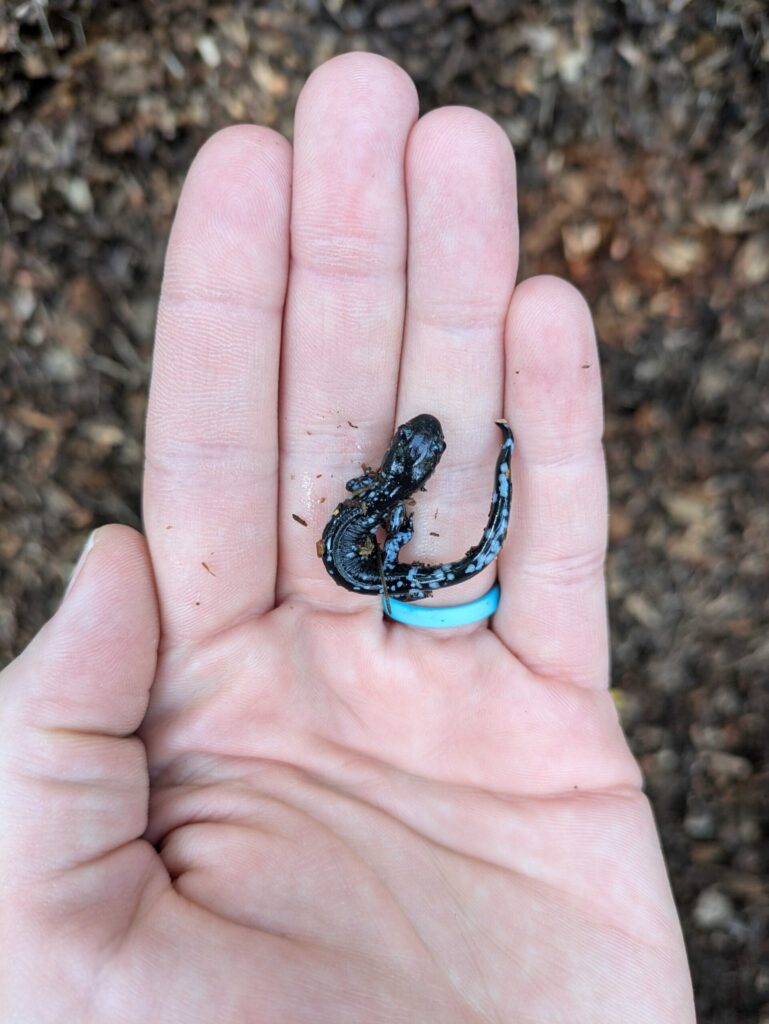
Sheridan holding a Blue-spotted salamander.